Halloween in Ireland: Where the Tradition Began
Every October, the world reaches for its own version of Halloween, the costumes, the carved pumpkins, the manufactured scares. Few people pause to ask where any of it came from. The answer is Ireland, and it is older than most of us imagine.
More than two thousand years ago, the Celts who lived across this island marked the turning of the year with Samhain: the night the harvest ended, the cold set in, and the boundary between this world and the next was believed to thin. Fires were lit on the hills. The dead were remembered. Everything we now call Halloween traces back to those Irish nights, not as a theory, but as a matter of record.
Which raises a quiet question for anyone who loves the season. If Halloween began here, why settle for the imitation abroad when you can experience the original at its source?
Late October is Ireland at its most atmospheric; low golden light, empty roads, the summer crowds long gone, and a calendar of festivals that carry the Samhain story forward. In 2026 that includes Derry Halloween marking its fortieth year as the largest celebration of its kind in Europe, and the Púca Festival lighting up the ancient heartland of Meath, where the tradition was born. You need only choose the one that speaks to you. We will take care of everything that surrounds it: a private driver and guide, a considered pace, and the kind of access that turns a visit into something you will still be describing years from now.
This is Halloween as it was meant to be. This is where it began.
The origins of Halloween: Ireland and the ancient festival of Samhain
Long before it crossed the Atlantic, the night belonged to Ireland. To understand Halloween, you have to go back more than two thousand years, to a people who measured their lives by the turning of the seasons and marked the darkest of those turns with fire, feasting, and a deep respect for the unseen.
What is Samhain?
Samhain (pronounced sow-in) is the ancient Celtic festival that marks the end of the harvest and the beginning of winter, held from sunset on 31 October to sunset on 1 November. For the Celts, it was the most significant night of the year: the threshold between the light half and the dark half, when the old year died and the new one had not yet begun. They believed that on this night the boundary between the living and the dead grew thin, and that the spirits of those who had passed could cross back into the world. Bonfires were lit to honour them and to ward off what the darkness might bring. Food was set aside. Costumes were worn to move unseen among the visitors. Nearly every custom we now associate with Halloween began here, in this single Irish night.
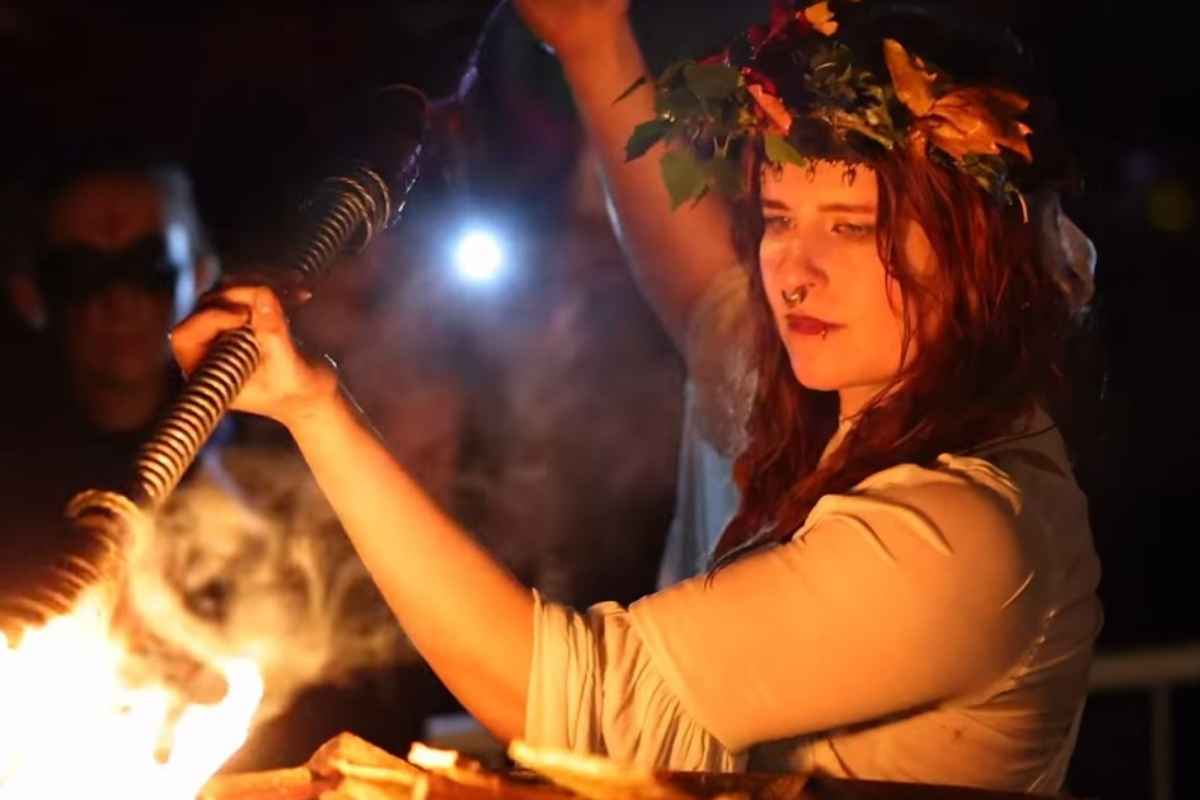
Reviving ancient Samhain rites: A ritual performance initiates the dramatic opening fire ceremony at the Púca Festival in Meath.
How Samhain became Halloween
For centuries, Samhain was observed across Ireland as the year’s great hinge. When Christianity arrived, the church placed All Saints’ Day on 1 November and All Souls’ Day on the 2nd: feasts for the holy and the departed, laid deliberately over the older festival. The evening before became All Hallows’ Eve, and in time, Halloween. The name changed; the essence did not.
The tradition travelled with the Irish. When emigrants carried it to North America in the nineteenth century, they brought the bonfires, the disguises, and the lanterns, carved first from turnips at home, and then from the pumpkins they found in abundance across the Atlantic. What returned to the world as a night of costumes and sweets had left Ireland as something far older and more meaningful.
And it left from a specific place. The great Samhain fires are associated with the Hill of Ward in County Meath, in the ancient royal heartland that also holds Tara and the valley of the Boyne. This is the ground where the tradition took shape, and, as you will see, where it is still marked today, within sight of where it began.
Why October is Ireland’s most atmospheric season
There is a case to be made that Ireland is never more itself than in late October. The light goes low and gold. The tour coaches have gone home. And the landscape that draws visitors in summer takes on something the brochures rarely capture: a stillness, an edge, a sense that the country is keeping a secret it has kept for two thousand years.
The landscape in Fall
Fall suits Ireland. The hedgerows turn copper and russet, the hills soften under low clouds, and the whole island seems to exhale after the busyness of summer. Ancient sites feel their age at this time of year: a stone circle in the thin morning light, a ruined abbey with the mist still lying in the fields, a castle tower against a sky the color of pewter. The great houses and country estates come into their own as the evenings draw in: fires lit, whiskey poured, the wildness kept comfortably beyond the windows. It is a season made for slow travel and long dinners, for arriving somewhere just as the light fails and being glad you did.
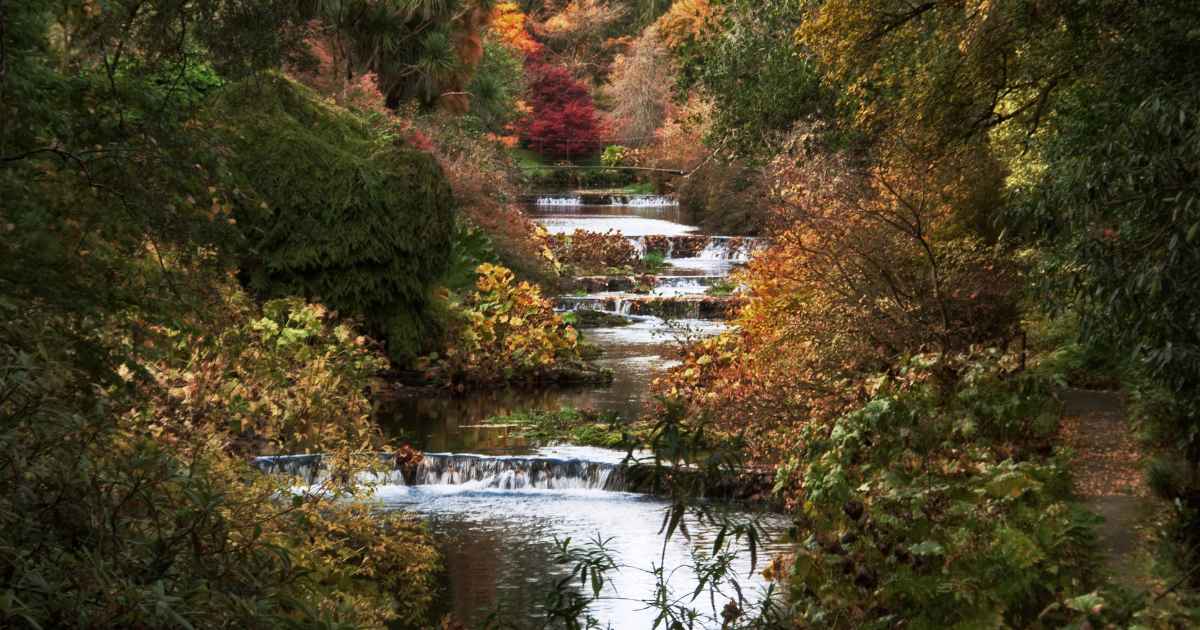
Autumn elegance at Mount Usher Gardens in Wicklow, where fiery fall foliage frames the cascading River Vartry.
Short days, no compromise
Honesty matters here: late October days in Ireland are short. The sun rises around half past seven and sets not long after five, and the weather does as it pleases. For the independent traveler, that means dark drives on unfamiliar rural roads, tight timing between places, and a good deal of the day lost to logistics.
For our guests, none of that lands. Your driver and guide knows the roads, watches the light, and shapes each day so the short hours work for you rather than against you: the scenic route taken while the sun is still up, the castle reached before dark, the evening arriving as a pleasure rather than a problem. You are never behind the wheel on a wet October night, never navigating, never rushing. The season’s one real drawback quietly becomes someone else’s job. What is left for you is the part worth having: the light, the quiet, and the sense of a country at its most beautiful.
Derry Halloween: Europe’s greatest, in its fortieth year
If Meath is where the tradition began, Derry is where it is celebrated most spectacularly. Each year the walled city on the banks of the Foyle gives itself over to Halloween on a scale nowhere else in Europe attempts and in 2026, it does so as it marks a landmark year.
A fortieth anniversary worth timing
Derry Halloween runs from 28 October to 1 November 2026, and this year carries particular weight: it is the festival’s fortieth anniversary. What began four decades ago has grown into what is widely recognised as the largest Halloween celebration in Europe: days of street theatre, light installations, fireworks over the river, and a carnival parade that fills the historic streets and draws visitors from around the world.
There is something fitting about a city in the northwest of Ireland holding the largest celebration of a festival that Ireland gave the world. Derry does not borrow Halloween; it inherits it. The atmosphere across the city walls and along the Foyle during those days is the modern echo of those first Samhain fires: the same instinct to gather in the dark, mark the turning year, and make light against it. A fortieth year is reason enough to see it now, at the height of what it has become.
Experiencing the scale, privately
A festival of this size is thrilling, and it can also be a great deal to navigate: road closures, packed streets, the logistics of a city at full capacity. This is where t
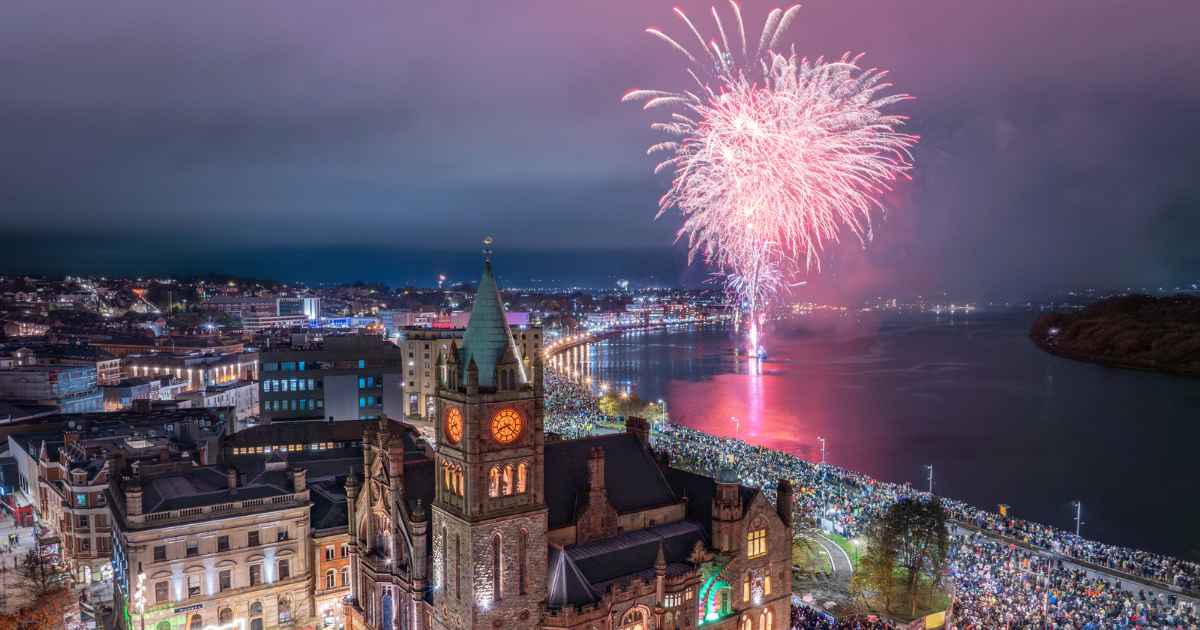
The grand finale fireworks display lights up the River Foyle and the historic Guildhall for Derry Halloween.
he difference between attending Derry Halloween and experiencing it becomes clear.
Where you sleep shapes the whole experience, and there are two good ways to do this. You can stay in the middle of it, inside the old city walls, a short walk from the parade route, the illuminations, and the streets where the festival comes alive. Or you can take yourself out of it, to a private house or country hotel within easy reach of the city, where the evenings are quiet and the program is curated rather than stumbled into: the parade, the fireworks over the Foyle, the walled city trail, each one timed and accessed on your behalf. Either way your driver and guide handles everything around it, the arrival into a city at capacity, the days out along the Causeway coast, the departure when the time comes, while road closures and congestion remain someone else’s concern. You are at the largest Halloween celebration in Europe, free to enjoy it at whatever pace and remove suits you.
Púca Festival: Halloween at its birthplace
Derry offers the grandest celebration. Meath offers the original. If Derry is where Halloween is marked most spectacularly, the Púca Festival is where it is marked most meaningfully on the very ground where Samhain was born, in the ancient royal heartland where the first fires were lit more than two thousand years ago.
The living heart of Samhain in Meath
Púca takes place across the towns of Trim and Athboy in County Meath, in the landscape that gave the festival its meaning. This is the region of the Hill of Ward, of Tara, and of the Boyne Valley, the ceremonial centre of ancient Ireland, and the birthplace of Halloween itself. The festival takes its name from the púca, a shape-shifting spirit of Irish folklore associated with Samhain, and it exists precisely to honor the origin: fire ceremonies, music, feasting, and storytelling drawn directly from the traditions that began here.
There is a particular resonance to standing in Meath at the turn of the year. You are not attending a festival that borrows the imagery of Halloween; you are in the place the imagery came from, watching a two-thousand-year-old tradition kept alive by the people whose ancestors began it. For the traveler who chooses depth over spectacle, who would rather understand a thing than simply watch it, Púca is the one.
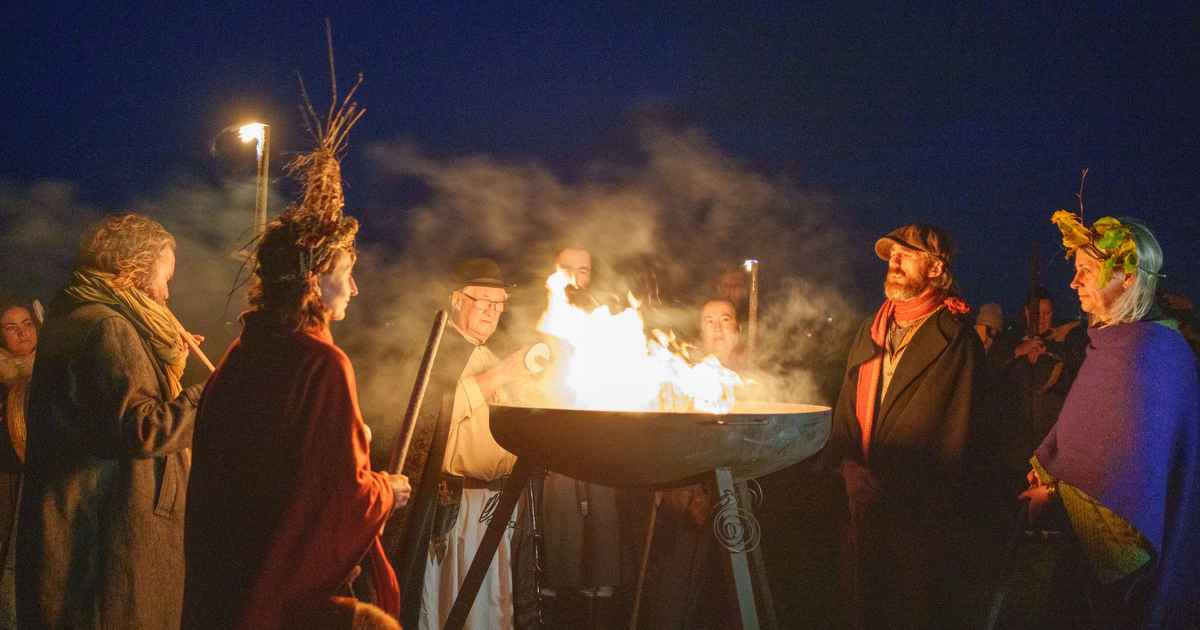
Lighting the symbolic Samhain fire at the Púca Festival in County Meath, reviving Ireland’s oldest autumn traditions.
When it takes place
Púca runs from 29 October to 1 November 2026, spread across Trim and Athboy. For a guest based in this part of Ireland, the festival sits within easy reach of Dublin and the great sites of the Boyne Valley, Trim Castle, the Hill of Tara, the passage tombs at Brú na Bóinne, so the days around the evenings are as rich as the festival itself, and all of it is arranged around you.
Experiencing Halloween in Ireland, privately
Two festivals, two very different nights. Derry gives you the spectacle; Púca gives you the source. Most travelers are drawn to one or the other, and that is exactly as it should be. This is not a trip built around rushing between events, but around choosing the one that speaks to you and giving it the time it deserves.
That is where we come in. We do not sell a fixed itinerary with your name added to the top. Our Travel Specialists start with the festival you have chosen and build outward from there. The right base for those particular nights, the days around them shaped to your interests, and a pace that leaves room for the long dinners and unhurried mornings that make a trip in this season worth taking.
Throughout, you travel with your own private driver and guide. It is the detail that changes everything about visiting Ireland in late October: the short days handled for you, the rural roads and the weather no longer your problem, the route planned so you arrive everywhere with the light still on your side. You are free to be present, to watch the fireworks, walk the old streets, stand by the fire, while the logistics simply disappear.
This is how Halloween in Ireland is meant to be experienced. Not queued behind a coach, not lost in the crowd, but held quietly and personally, in the country that gave the festival to the world.
Begin your Irish Halloween
Halloween began in Ireland, and there is no substitute for experiencing it where it started, the fires, the folklore, and the turning of the year, in the country that gave them all to the world. Whether you are drawn to the spectacle of Derry in its fortieth year or the ancient heart of Samhain in Meath, 2026 is the year to see it properly.
Tell us which of the two draws you, and we will build the trip around it. The right base for those nights, the days shaped to your interests, and your own driver and guide to carry you through the season with ease. All you need to do is decide to come.
Let Sheenco Travel create a bespoke October experience in Ireland for you. Book a call with our Travel Specialists to start the conversation today.
Planning your Halloween in Ireland trip Common Questions.
Where did Halloween originate?
Halloween originated in Ireland more than two thousand years ago as the ancient Celtic festival of Samhain, which marked the end of the harvest and the beginning of winter. The customs of Samhain — bonfires, disguises, and remembering the dead — travelled with Irish emigrants to North America, where they evolved into the Halloween celebrated today.
What is Samhain?
Samhain (pronounced sow-in) is the ancient Celtic festival held from sunset on 31 October to sunset on 1 November, marking the turn from the light half of the year to the dark. The Celts believed the boundary between the living and the dead grew thin on this night. It is the direct origin of modern Halloween.
When is Halloween in Ireland in 2026?
Halloween falls on 31 October 2026, but Ireland’s festivals run across the surrounding days. Derry Halloween takes place from 28 October to 1 November 2026, marking its fortieth anniversary, while the Púca Festival runs from 29 October to 1 November across Trim and Athboy in County Meath.
Is Derry Halloween worth visiting?
Yes. Derry Halloween is widely recognised as the largest Halloween celebration in Europe, with street theatre, illuminations, fireworks over the River Foyle, and a carnival parade through the historic walled city. Its fortieth anniversary in 2026 makes it a particularly notable year to visit.